
Sustainable Product Development &
Engineering Practices for Nordic Enterprises
Table of Contents
Introduction
Nordic countries—Sweden, Denmark, Norway, Finland, and Iceland—are at the vanguard of sustainable innovation. Their product development systems interweave advanced engineering with environmental stewardship, aiming to deliver high-performance, long-lasting, eco-friendly products. This article explores how Nordic engineering teams transform sustainability from a side note into the bedrock of their development cultures, methodologies, and toolchains.
Why Sustainability Is Critical in 2026
Sustainability is no longer a secondary consideration or a box to check—it has become a central pillar of strategic business planning and product development, especially for forward-thinking Nordic enterprises. As global markets shift and new expectations emerge, companies must understand the forces driving the urgency for sustainable practices in 2026.
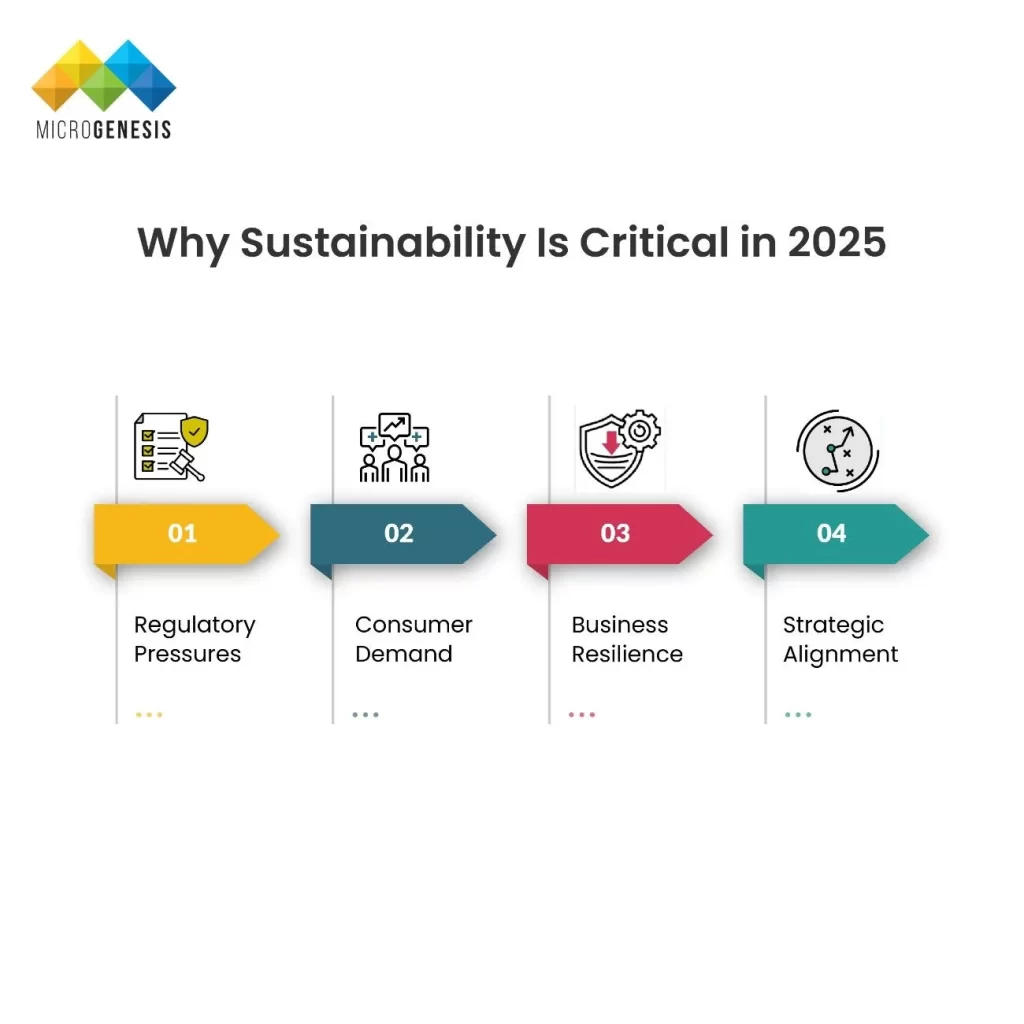
a. Regulatory Pressures
- European legislation has rapidly evolved, demanding a robust commitment to sustainability across industries. The European Green Deal, EcoDesign Directive, and upcoming Product Lifecycle Regulations are not just policies—they’re mandates that shape how companies design, develop, and deliver their products.
- Green Deal Goals: Targeting climate neutrality by 2050, the European Green Deal requires businesses to cut emissions and improve energy efficiency. Products must now be designed with their full lifecycle in mind—from raw material sourcing to end-of-life disposal.
- EcoDesign Directive Expansion: Once limited to energy-related products, the directive now applies to a broad spectrum of goods, mandating durability, reparability, and recyclability.
- Lifecycle Reporting Compliance: Companies are expected to provide transparent reporting on the environmental footprint of their products, including material sourcing, energy consumption, and waste.
- Impact: Non-compliance can result in product bans, penalties, and reputational damage. Forward-looking companies are integrating regulatory checks directly into their ALM (Application Lifecycle Management) and PLM (Product Lifecycle Management) systems to ensure built-in compliance.
b. Consumer Demand
- Today’s consumers—particularly in Nordic markets—are highly informed, environmentally conscious, and value-driven. They demand more than functionality and price; they want to buy from brands that align with their values.
- Sustainable Preferences: A growing body of market research shows that Nordic customers are willing to pay a premium for sustainable products, especially those with transparent eco-labeling and circular economy credentials.
- Transparency Expectations: Eco-labels like the Nordic Swan, EU Ecolabel, and Cradle to Cradle are increasingly influencing purchasing decisions.
- Social Responsibility: Buyers not only look at environmental performance but also social and ethical practices, such as fair labor, carbon offsetting, and community engagement.
- Impact: Businesses that ignore these expectations risk losing market share to greener competitors. Sustainability isn’t a niche—it’s a primary competitive differentiator.
c. Business Resilience
- Sustainable practices aren’t just about environmental impact—they directly enhance operational resilience and long-term profitability.
- Resource Efficiency: As raw material costs rise and resource scarcity becomes more pronounced, companies that embrace sustainable sourcing and lean manufacturing enjoy greater cost stability.
- Green Financing & Tax Incentives: Nordic enterprises that demonstrate strong sustainability performance gain better access to green loans, ESG-linked investment, and favorable taxation.
- Risk Mitigation: Environmental and reputational risks are substantially reduced when sustainability is embedded across the value chain.
- Impact: Resilient, future-proof business models are now built on sustainability foundations. Whether through lower operating risks or greater investor trust, the business case is strong.
d. Strategic Alignment
- Sustainability is no longer siloed within corporate social responsibility (CSR) departments. It now permeates product strategy, innovation, and business transformation efforts.
- Innovation Driver: Companies that innovate around sustainable goals often find new materials, processes, and technologies that improve both performance and environmental impact.
- Digital Integration: Sustainability metrics are being integrated into digital engineering systems like ALM and Digital Twins, enabling data-driven decision-making from concept to disposal.
- Global Leadership: Nordic enterprises have the opportunity to lead by example on the global stage. By embedding sustainability into their DNA, they don’t just meet the bar—they set it.
- Impact: Sustainability becomes an engine for differentiation, market leadership, and brand equity—not merely a response to compliance.
The Nordic Advantage in Green Engineering
Nordic countries—Sweden, Norway, Finland, Denmark, and Iceland—consistently rank among the world’s leaders in sustainability, innovation, and quality of life. When it comes to green engineering and sustainable product development, these nations benefit from a unique convergence of cultural values, robust policy frameworks, and cutting-edge technological ecosystems. Here’s a deeper look at what sets the Nordic region apart.
a. Policy and Culture: A Deep-Rooted Environmental Ethic
Environmental consciousness is not a trend in the Nordics—it’s embedded in the culture and supported by forward-thinking policies.
- Governmental commitment to sustainability: National and EU-level policies, such as the European Green Deal and country-specific climate targets (e.g., Sweden’s net-zero goal by 2045), drive funding and regulation for sustainable innovation.
- Carbon pricing and emissions incentives: Mechanisms like carbon taxes and emissions trading systems make environmentally damaging practices less economically attractive, encouraging low-carbon product design from the outset.
- Consumer pressure and cultural expectations: Sustainability is a strong value among Nordic consumers. Businesses are expected to lead by example—making green engineering not only a business opportunity but a social responsibility.
Impact: These policies and cultural expectations provide the fertile ground needed for companies to adopt and scale sustainable engineering practices.
b. Ecosystem Collaboration: The Power of Public-Private Partnership
Innovation in the Nordics is not confined within corporate walls. It thrives in open ecosystems where academia, industry, government, and startups actively collaborate.
- Academic institutions as innovation hubs: Organizations like Finland’s VTT Technical Research Centre and Norway’s SINTEF play a pivotal role in green R&D, offering testbeds and research facilities for sustainable technologies.
- Triple helix collaboration models: Public funding and strategic alliances between government bodies, research institutions, and private enterprises promote shared innovation goals and resource pooling.
- Cross-border synergies: Nordic nations regularly collaborate on joint sustainability projects, especially in clean energy, smart manufacturing, and sustainable mobility.
Impact: These networks help reduce the cost and risk of green engineering initiatives while accelerating their real-world implementation.
Dig Deeper: Top Challenges in Smart Manufacturing Implementation
c. Engineering Excellence: High-Quality, Lifecycle-Oriented Product Design
Nordic companies have long been known for building durable, high-performance products that can withstand demanding environments. This tradition translates naturally into sustainability.
- Lifecycle thinking is standard: Products are built not just to meet immediate market needs but to perform reliably across extended lifecycles—minimizing waste and replacement frequency.
- Precision engineering across industries: From electric vehicles to wind turbines and advanced medical equipment, Nordic design emphasizes robustness, safety, and low environmental impact.
- Emphasis on verification and compliance: R&D and product teams integrate sustainability metrics (e.g., LCA, recyclability, emissions) into every stage of development, aligning with ISO and EU standards.
Impact: Engineering rigor and quality elevate sustainability from a value proposition to a product feature.
d. Agile Startups: A Green Innovation Engine
Beneath the industrial giants, the Nordic startup ecosystem is a hotbed for disruptive green technologies and sustainable product innovation.
- Sustainable startups are thriving: From carbon-neutral construction materials to next-gen battery tech and sustainable wearables, cleantech startups are rapidly prototyping and commercializing green solutions.
- Access to early-stage funding: Governments, angel networks, and EU innovation funds (like Horizon Europe and EIC Accelerator) offer strong support for mission-driven innovation.
- Fast iteration and digital-native solutions: Many Nordic startups integrate AI, digital twins, and agile product development to accelerate eco-innovation at a fraction of traditional cost and time.
Impact: Startups provide the agility and creative risk-taking that larger enterprises often struggle to sustain—feeding the innovation pipeline with fresh ideas and disruptive technologies.
Core Principles of Sustainable Product Development
To create truly sustainable products, organizations must embed environmental responsibility and lifecycle thinking into the very foundation of their product development process. The following core principles serve as essential building blocks for environmentally sound and economically viable innovation.
Eco-Design and Sustainable Materials
- Designing with the environment in mind begins at the material selection stage and continues through structural and functional decisions.
- Prioritize renewable and recycled materials: Choose components made from biodegradable, recyclable, or reused inputs to reduce the carbon and waste footprint from the outset.
- Design for simplicity and repairability: Reduce complexity by minimizing the number of components and standardizing parts. This simplifies repair, reuse, and eventual recycling.
- Minimize weight and resource use: Lightweight designs not only save material but also contribute to energy efficiency during transportation and operation.
- Why it matters: Eco-design minimizes environmental impact throughout the lifecycle and aligns product development with circular economy goals.
Energy Efficiency and Low-Carbon Engineering
- Reducing energy usage and emissions during both production and usage phases is a cornerstone of climate-resilient engineering.
- Incorporate energy-saving functionalities: Features such as low-power standby modes, intelligent power management, or efficient heat dissipation are vital for minimizing operational energy demand.
- Design for low-carbon impact: Select components and manufacturing processes that reduce embodied carbon—especially in electronics, mechanical systems, and packaging materials.
- Optimize energy use across the lifecycle: Leverage digital simulation and ALM tools to forecast and reduce energy consumption during development and deployment.
- Why it matters: Energy-efficient products are better for both the planet and the bottom line—meeting growing regulatory and consumer expectations.
Prolonged Product Lifespan and Upgradability
- Longevity is a defining feature of sustainable products. Extending the life of a product reduces waste and delays the need for resource-intensive replacements.
- Adopt modular design principles: Build products in a way that allows individual components to be replaced or upgraded without discarding the whole system.
- Enable remote updates and fixes: Through over-the-air (OTA) updates, manufacturers can introduce new features, improve performance, or address issues—prolonging the functional relevance of the product.
- Support repair ecosystems: Design with open documentation and accessible components so that authorized or even third-party services can maintain and repair products efficiently.
- Why it matters: Products that last longer generate less waste, conserve resources, and foster trust among customers who value durability.
Circular Design and End-of-Life Planning
- Sustainability doesn’t stop at the point of sale. True responsibility includes planning for what happens when a product is no longer in use.
- Design for disassembly: Make it easy to take products apart without damaging components. This improves the efficiency of recycling and remanufacturing.
- Implement product take-back schemes: Facilitate the return of used products so valuable components can be recovered and reused.
- Enable remanufacturing and refurbishment: Develop products with quality materials that can be reprocessed for second life cycles, reducing demand for virgin resources.
- Why it matters: Circular practices reduce waste, conserve raw materials, and close the loop on environmental impact.
Embedding Sustainability Across the Product Lifecycle
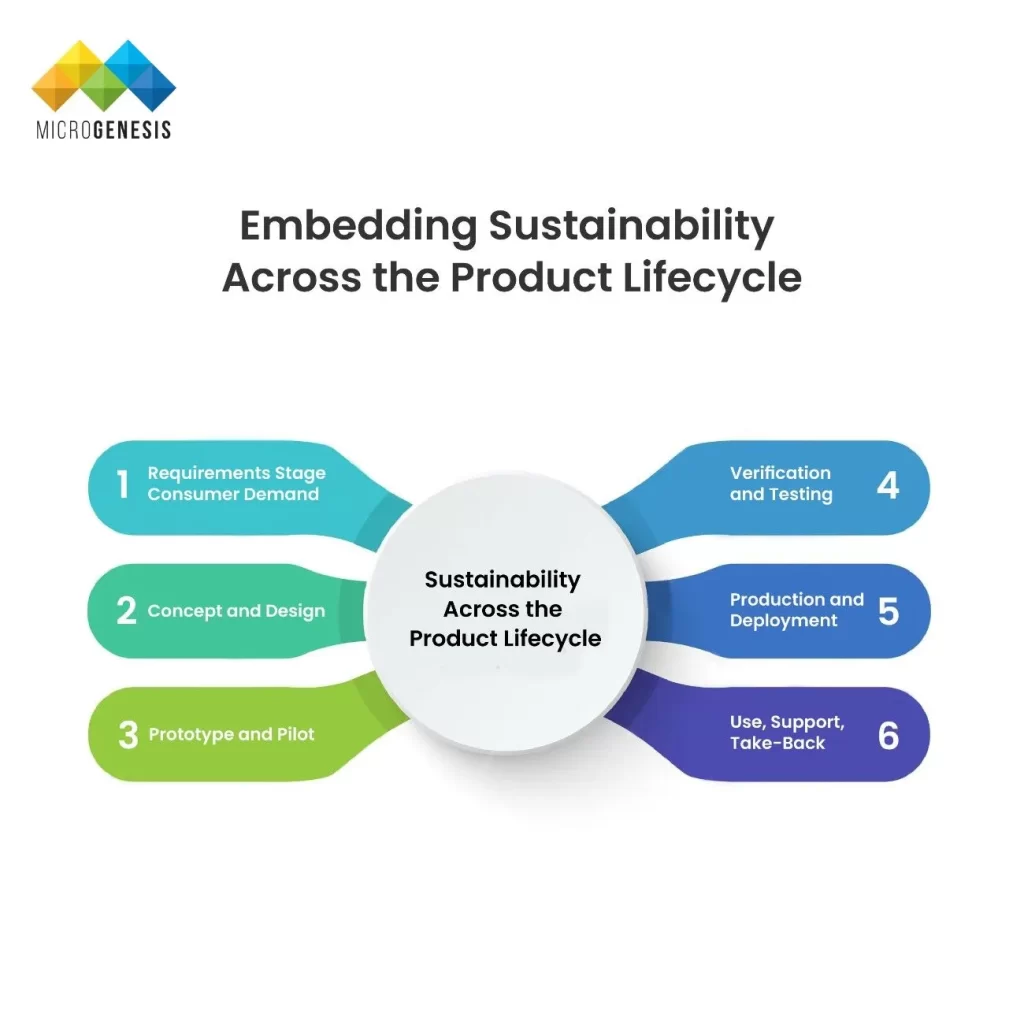
Requirements Stage
Include eco-metric criteria (CO₂ targets, recyclability percentages) and trace them via your ALM or PLM toolchain.
Concept and Design
Utilize CAD materials databases and Digital Twins to simulate environmental impact before production.
Prototype and Pilot
Test with eco-materials and early LCA results to refine product design.
Verification and Testing
Build formal eco-tests (energy consumption, recyclability) into validation pipelines with traceability.
Production and Deployment
Monitor manufacturing energy usage and emissions; leverage modularity and OTA updates during deployment.
Use, Support, Take-Back
Design for maintainability; track in-field sustainability performance and close the loop.
Sustainable Supply Chain and Production
- Supplier Assessment: Require environmental metrics, certifications (e.g., FSC, ISO 14001).
- Material Traceability: Tag materials with digital tracking for accountability.
- Green Logistics: Optimize for low-carbon transport; use reusable packaging and circular logistics.
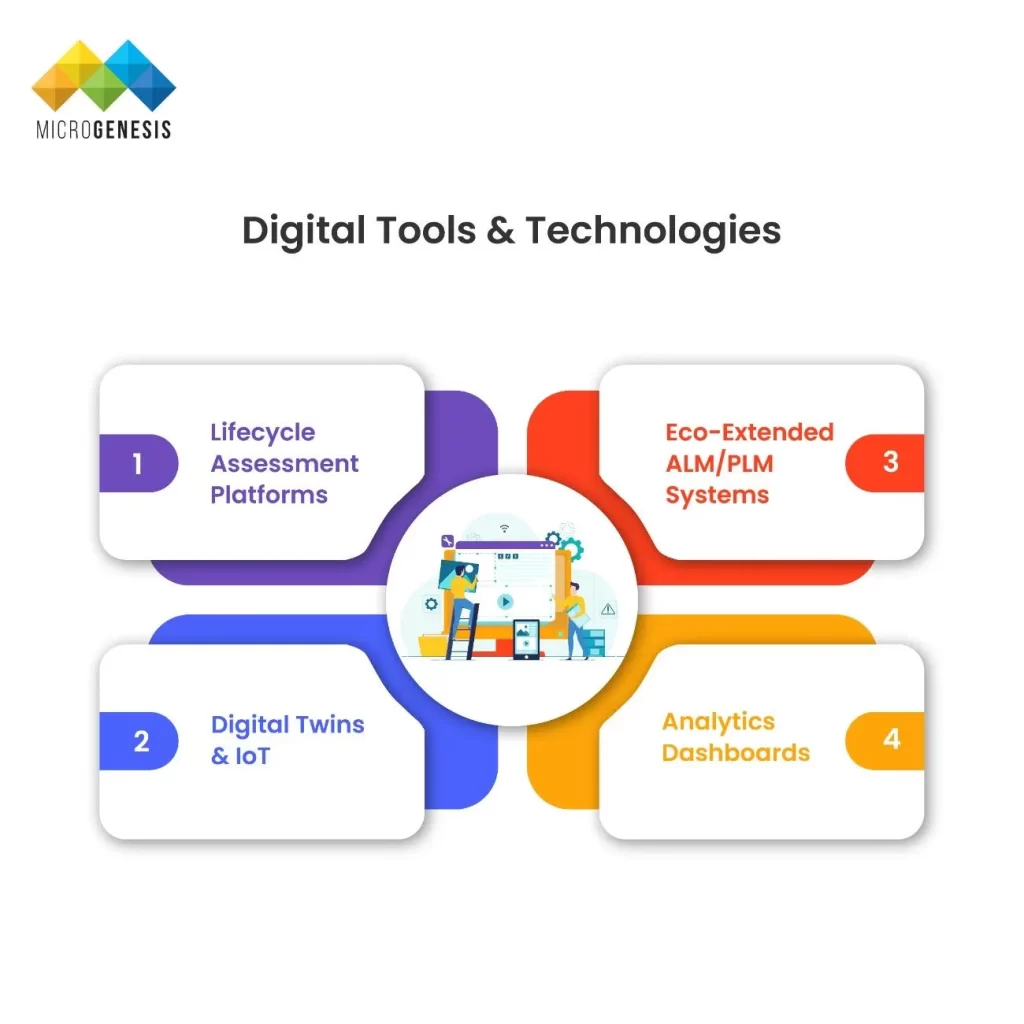
Digital Tools & Technologies
- Lifecycle Assessment Platforms: Tools like SimaPro and OpenLCA integrated into ALM/PLM.
- Digital Twins & IoT: Real-time sustainability metrics from IoT sensors feeding into production control.
- Eco-Extended ALM/PLM Systems: Sustainability fields built into systems like Codebeamer, IBM ELM.
- Analytics Dashboards: Track GWP, recyclability, and other metrics in performance dashboards.
Organizational Culture, Governance & KPIs
- Assign sustainability roles across teams
- Set formal KPIs (CO₂/unit, easy-repair score)
- Incentivize through training and innovation initiatives
- Partner across the ecosystem—public, industry, academia
Nordic Case Studies
EV Battery Module Design
Modular design with remanufacturing schematics; tracked via ALM; results: +40% recyclability with 30% CO₂ reduction.
Consumer IoT Device
Made from certified recycled plastics; OTA firmware updates enable reuse through circular value proposition; results: -25% emissions.
Robotic Assembly Systems
Robot designed for full remanufacture, predictive maintenance scheduled via IoT and ALM; field data used to improve next-gen sustainability specs.
Common Challenges & Mitigation
- Higher Upfront Cost: Use lifecycle ROI models showing TCO savings
- Data Silos: Integrate LCA data via APIs into ALM/PLM
- Change Resistance: Start with pilots, showcase wins
- Regulatory Complexity: Use eco-gated ALM workflows to comply systematically
Roadmap for Adoption: Building a Sustainable Engineering Practice
Sustainable product development isn’t a one-time initiative—it’s a strategic transformation that touches every part of your engineering and product lifecycle. Below is a pragmatic roadmap to help Nordic enterprises adopt sustainable development practices with clear milestones, scalable actions, and long-term value.
1. Assessment: Baseline Your Sustainability Readiness
Start by auditing your current product portfolio, tools, and processes for environmental impact and sustainability gaps.
- Perform product lifecycle assessments (LCAs) for flagship and high-volume products.
- Identify carbon hotspots across raw materials, manufacturing, usage, and disposal phases.
- Evaluate supply chain resilience and alignment with green procurement practices.
- Survey engineering and product teams to assess awareness, capabilities, and readiness.
✅ Outcome: Clear understanding of where you stand and where sustainability can be prioritized.
2. Pilot Projects: Start Where It Matters Most
Begin with targeted, high-potential initiatives. Choose products that:
- Have the largest environmental footprint (e.g., high energy consumption, complex materials).
- Offer market differentiation through eco-innovation.
- Face upcoming regulatory pressure or are part of public procurement programs.
Run 2–3 pilot projects to explore different sustainability angles such as material reduction, modularity, or carbon footprint tracking.
✅ Outcome: Quick wins that demonstrate value and build internal momentum.
3. Process Integration: Embed Sustainability into ALM Workflows
Application Lifecycle Management (ALM) tools are essential for integrating sustainability into everyday engineering decisions.
- Add custom eco-attributes to product requirements (e.g., recyclability %, energy consumption targets).
- Include sustainability checkpoints in stage-gate and design review processes.
- Integrate compliance validation for directives like RoHS, REACH, and EcoDesign directly into quality management flows.
- Link sustainability goals to KPIs in project and release planning dashboards.
✅ Outcome: Sustainability is no longer ad hoc—it’s part of product DNA.
4. Toolchain Integration: Connect Systems and Ecosystems
To manage environmental impact effectively, your development stack must connect with lifecycle analysis and supply chain tools.
- Integrate ALM with LCA software (e.g., SimaPro, GaBi) to automate carbon, material, and energy calculations.
- Connect to PLM and MES platforms to ensure traceability from design to production.
- Enable supplier data integration for material passports and carbon accounting.
- Use OSLC or API-based frameworks to allow sustainability data exchange across tools.
✅ Outcome: A connected digital ecosystem that supports measurable and transparent sustainability.
5. Rollout & Training: Build a Green Engineering Culture
Sustainable development requires both tooling and people who know how to use it.
- Provide training programs on eco-design principles, lifecycle thinking, and compliance mandates.
- Offer hands-on workshops for using sustainability features in ALM, PLM, and LCA platforms.
- Appoint sustainability champions in each team to guide adoption and drive accountability.
- Include eco-KPIs in performance reviews and team objectives to reinforce alignment.
✅ Outcome: A workforce skilled in designing for sustainability—not just compliance.
6. Measurement & Support: Monitor Progress and Iterate
Implement continuous feedback mechanisms to measure the impact of sustainable engineering practices.
- Track metrics such as CO₂-equivalent reduction, material recyclability, design reuse rate, and product durability.
- Use dashboards to visualize sustainability indicators alongside technical KPIs.
- Run internal audits and external verifications to validate claims and compliance.
- Create a feedback loop from customers and service teams to improve design decisions for future iterations.
✅ Outcome: Data-driven sustainability management and continuous improvement.
7. Branding & Validation: Communicate Credibility and Impact
As sustainability becomes a key buying criterion, your engineering success must also become a market story.
- Apply for recognized eco-labels like the Nordic Swan, EU Ecolabel, or Blue Angel to validate your efforts.
- Publish sustainability fact sheets and digital product passports to inform consumers and stakeholders.
- Highlight sustainable design features (e.g., modularity, repairability) in product marketing.
- Use QR codes or NFC tags on physical products to share end-of-life and recycling guidance.
- Partner with certification bodies and industry alliances to ensure trust and transparency.
✅ Outcome: Enhanced brand equity, customer trust, and access to sustainability-driven procurement opportunities.
Future Trends in Sustainable Product Engineering
As sustainability matures from a compliance goal into a core innovation driver, the future of product engineering will be shaped by emerging technologies and collaborative ecosystems. Here are the top future-forward trends that Nordic enterprises—and global innovators alike—should keep on their radar.
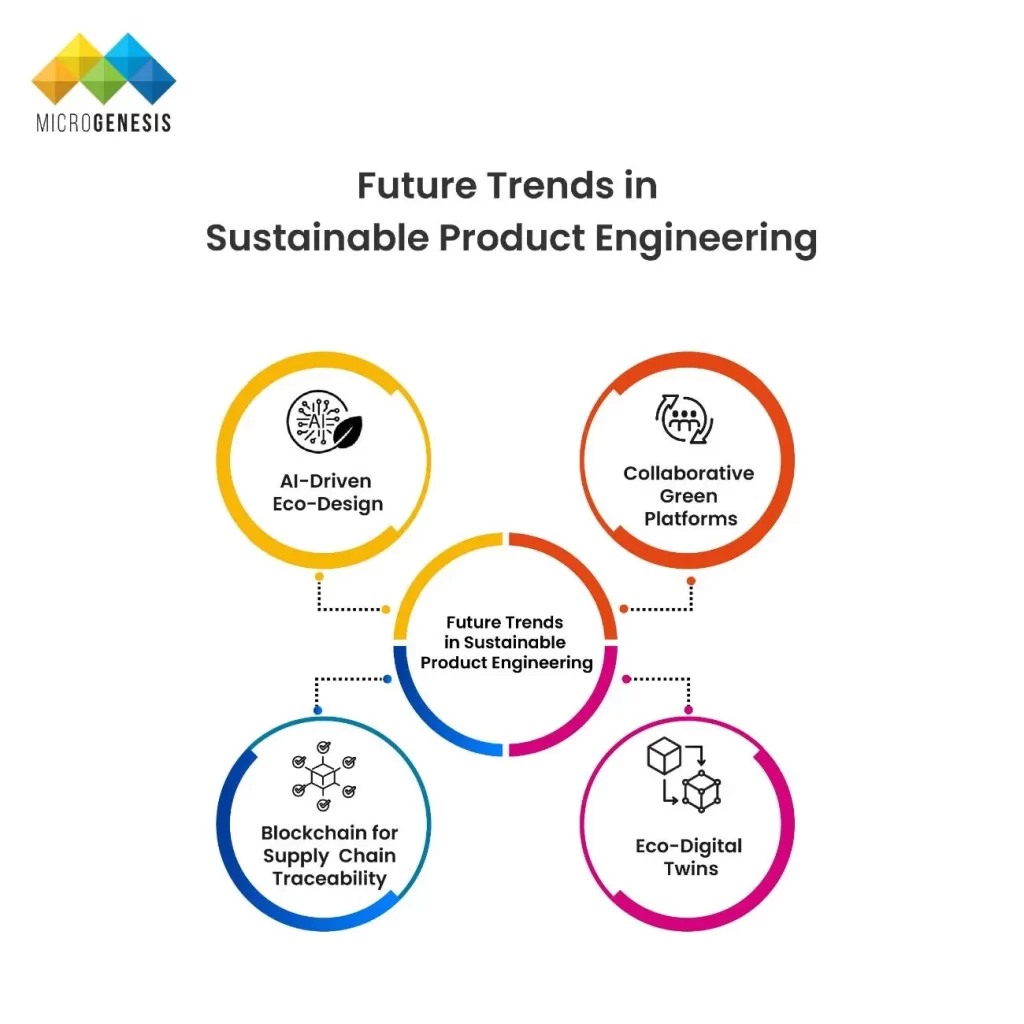
1. AI-Driven Eco-Design
What’s happening:
Artificial Intelligence (AI) is evolving from productivity assistant to design partner. AI-powered design tools are now capable of analyzing sustainability criteria and recommending greener alternatives in real-time.
How it works:
- AI can auto-suggest materials with lower environmental impact based on product function.
- Machine learning models analyze historical design data to reduce waste and optimize geometries for recyclability or reduced energy use.
- AI-powered simulation engines evaluate lifecycle emissions, durability, and energy efficiency before prototypes are built.
Impact on Nordic enterprises:
- Accelerates green innovation cycles with less manual iteration.
- Democratizes sustainable design across engineering teams—not just experts.
- Integrates with existing CAD/PLM/ALM ecosystems for real-time sustainability decisions.
🟢 Example: AI-generated bike frame designs that use 20% less material with equal strength.
2. Blockchain for Supply Chain Traceability
What’s happening:
Blockchain is moving beyond fintech to help verify the origin and environmental credentials of components, raw materials, and suppliers.
How it works:
- Immutable blockchain ledgers track each component from source to end product.
- Smart contracts validate ESG compliance—like conflict-free minerals or FSC-certified wood.
- Distributed networks enable cross-border, multi-tier supplier transparency without requiring centralized databases.
Impact on Nordic enterprises:
- Enables trust and traceability across complex supply chains (especially in automotive, electronics, and MedTech).
- Supports compliance with European supply chain due diligence laws and ESG reporting frameworks.
- Builds consumer confidence in sustainability claims and certifications.
🟢 Example: Using blockchain to verify sustainable aluminum sourcing in EV manufacturing.
Learn: How Digital Twin in Automotive R&D is Driving Innovation and Efficiency
3. Eco-Digital Twins
What’s happening:
Digital twins are evolving into “eco-digital twins”—dynamic digital replicas that continuously monitor and simulate the environmental footprint of products throughout their lifecycle.
How it works:
- Sensors and IoT data feed real-time energy usage, wear patterns, and carbon impact into the digital model.
- The twin predicts degradation, repair needs, and end-of-life recycling options.
- Integrated with ALM and PLM, the eco-digital twin provides ongoing sustainability insights during operation and service phases.
Impact on Nordic enterprises:
- Helps manufacturers extend product lifespan, reduce maintenance waste, and optimize usage patterns.
- Informs second-life strategies (reuse, refurbish, remanufacture).
- Supports data-driven circular economy planning and sustainability auditing.
🟢 Example: A medical device manufacturer using an eco-digital twin to model sterilization cycles and reduce energy use.
4. Collaborative Green Platforms
What’s happening:
The sustainability challenges of the future—such as scope 3 emissions, biodiversity loss, or global supply disruption—can’t be solved in silos. Platforms are emerging to connect stakeholders across the product ecosystem for shared sustainability goals.
How it works:
- Open innovation platforms allow suppliers, OEMs, engineers, and regulators to co-develop greener products.
- Shared material libraries, impact databases, and eco-certification tools accelerate eco-design.
- Regional alliances (e.g., Nordic innovation hubs) create testbeds for pilot projects, scaling innovation faster.
Impact on Nordic enterprises:
- Reduces cost and time for compliance and eco-labeling through shared infrastructure.
- Encourages cross-industry collaboration (e.g., between MedTech and automotive) for breakthrough solutions.
- Enables sustainability-at-scale—especially for SMEs who lack internal green R&D capacity.
🟢 Example: A Nordic eco-design network where small manufacturers share verified suppliers and lifecycle data tools
Looking Ahead: Innovation Anchored in Responsibility
These trends aren’t just technological—they reflect a deeper shift in how products are conceived, built, and valued. In the near future, sustainable product development will no longer be a competitive differentiator. It will be a minimum expectation from regulators, customers, and employees alike.
Nordic enterprises are uniquely positioned to lead this charge—thanks to their strong foundations in environmental policy, design excellence, and collaborative ecosystems. By embracing AI, blockchain, eco-digital twins, and open platforms, they can ensure that green engineering becomes not only scalable but smart, profitable, and resilient.
Conclusion
Nordic enterprises exemplify green transformation by integrating sustainable design, circular practices, and digital eco-tooling into their engineering practices. The result: products that are not only innovative and high quality, but built to last, repair, and respect both people and planet. For companies aiming to emulate Nordic success, embedding sustainability into engineering workflows and organizational culture isn’t optional—it’s strategic.
MicroGenesis Sweden AB plays a pivotal role in enabling this transformation through its comprehensive Application Lifecycle Management (ALM) services. By integrating sustainability into ALM frameworks, MicroGenesis ensures that environmental considerations are embedded across every phase of the product lifecycle—from requirements management and design to development, testing, deployment, and maintenance.
Through advanced ALM solutions, the company helps organizations:
- Improve traceability and compliance with sustainability regulations
- Optimize resource utilization and reduce engineering waste
- Enable collaboration across distributed teams using integrated platforms
- Accelerate delivery of high-quality, sustainable products
By combining ALM best practices with digital engineering, DevOps, and automation, MicroGenesis empowers enterprises to build scalable, efficient, and eco-conscious solutions—aligning innovation with long-term business value and sustainability goals.
FAQS
Sustainable product development is the process of designing products that minimize environmental impact while maximizing efficiency, durability, and lifecycle value.
Sustainability is important because it helps reduce environmental impact, meet regulatory requirements, improve brand value, and ensure long-term business resilience.
Key principles include eco-design, energy efficiency, product longevity, circular design, and lifecycle thinking.
Circular design focuses on creating products that can be reused, repaired, refurbished, or recycled to reduce waste and resource consumption.
Eco-design is the practice of designing products with minimal environmental impact by using sustainable materials and energy-efficient processes.
Nordic countries lead through strong environmental policies, advanced engineering practices, public-private collaboration, and a culture that prioritizes sustainability across industries.
Sustainability is embedded from requirements and design to production, usage, and end-of-life through lifecycle assessments, eco-design principles, and circular strategies.
Digital tools like digital twins, lifecycle assessment platforms, and ALM/PLM systems help track environmental impact, optimize design decisions, and ensure compliance.
Challenges include higher upfront costs, data silos, resistance to change, supply chain complexity, and regulatory compliance.
Companies can adopt sustainable practices by assessing current processes, running pilot projects, integrating sustainability into workflows, and continuously measuring performance.
Benefits include reduced costs over time, improved brand reputation, regulatory compliance, better resource efficiency, and increased customer trust.
Yes, it reduces costs in the long run through energy savings, resource optimization, reduced waste, and improved product lifespan.
Sustainability improves quality by promoting durable design, efficient resource use, and better lifecycle performance.
Yes, it applies to all industries including manufacturing, electronics, automotive, healthcare, and consumer products.
Future trends include AI-driven eco-design, blockchain for supply chain traceability, eco-digital twins, and collaborative green platforms.
An eco-digital twin is a digital model that tracks and simulates the environmental impact of a product throughout its lifecycle.
AI helps by optimizing materials, reducing waste, improving energy efficiency, and simulating environmental impact during the design phase.
It involves sourcing materials responsibly, ensuring traceability, reducing emissions, and optimizing logistics for environmental impact.
Regulations like the European Green Deal and EcoDesign Directive require companies to design products that are energy-efficient, durable, and recyclable.
Yes, sustainability is a key differentiator that improves customer trust, market positioning, and long-term business success.