Introduction
Enterprises across the Nordic countries and the broader European Union are navigating increasingly complex IT landscapes. These organizations operate in some of the world’s most digitally advanced and regulation-conscious regions, where innovation must balance with compliance, operational efficiency, and sustainability.
Key Challenges Facing Nordic/EU Enterprises
While digital transformation continues to accelerate across sectors—from manufacturing and medtech to finance and public services—enterprises are grappling with several core challenges:
- Multi‑vendor complexity: IT ecosystems have evolved into intricate webs of SaaS providers, cloud platforms, on-premise systems, and legacy applications. Managing multiple vendors, contracts, tools, and support models has become increasingly difficult.
- Compliance and sovereignty requirements: Enterprises must adhere to strict regional and industry-specific regulations, including GDPR, NIS2, data sovereignty, ISO 27001, HIPAA (for healthcare), MDR (for medtech), and local labor laws. Ensuring compliance in both operational processes and vendor relationships is non-negotiable.
- Skill shortages: The demand for niche IT skills—particularly in areas like cloud infrastructure, DevOps, cybersecurity, and application support—often exceeds local supply. Enterprises face rising costs and delays in hiring or upskilling staff internally.
The Role of Managed IT Services
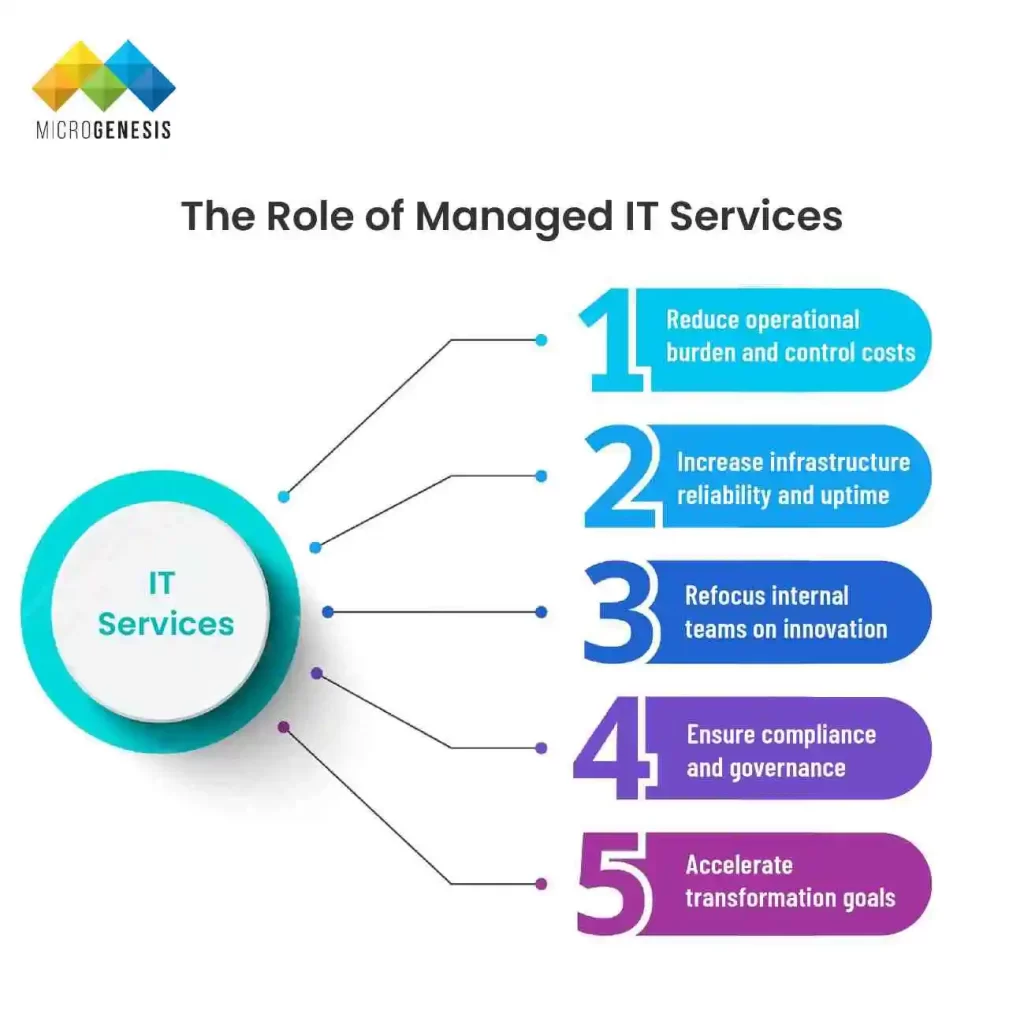
Managed IT services provide a strategic solution to these challenges. By partnering with a trusted, regionally-aligned service provider, Nordic and EU enterprises can:
- ✅ Reduce operational burden and control costs: Outsourcing recurring, resource-intensive tasks such as monitoring, patching, incident resolution, and vendor management reduces in-house workload and helps convert unpredictable IT expenses into predictable OPEX models.
- ✅ Increase infrastructure reliability and uptime: With 24×7 monitoring, proactive remediation, and SLA-backed performance guarantees, managed services improve system availability, reduce downtime, and ensure business continuity.
- ✅ Refocus internal teams on innovation: By offloading routine support and maintenance, internal IT and digital teams can shift focus to driving innovation, delivering new capabilities, and enhancing the customer or citizen experience.
- ✅ Ensure compliance and governance: Reputable managed service providers bring deep expertise in aligning operations with EU regulations and sector-specific standards, ensuring audits are passed and reputations are protected.
- ✅ Accelerate transformation goals: Whether modernizing legacy systems, adopting cloud-native platforms, or integrating new digital services, managed partners bring the tools, processes, and experience to reduce time-to-value.
Why It Matters Now
As economic conditions fluctuate and sustainability mandates grow stronger, businesses in the Nordics and EU are looking to do more with less. Managed IT services enable enterprises to:
- Maintain high performance without overextending internal teams
- Simplify complex environments through centralized management
- Balance agility with control, and innovation with compliance
This makes managed services not just a cost-saving option, but a strategic enabler of long-term growth and digital maturity.
Specialized Service Desk for Nordic and EU Enterprises
What Is a Specialized Service Desk – and Why It Matters
A specialized service desk is more than just a remote IT helpdesk—it is a centralized, strategic support layer designed to meet the unique operational, cultural, and regulatory needs of enterprises in the Nordics and EU.
Unlike generic offshore support models, a specialized service desk for this region ensures:
- ✅ Remote and on-site options tailored to enterprise size, criticality, and compliance policies
- ✅ Culturally aligned, multi-language support, accommodating native speakers in Swedish, Finnish, Danish, Norwegian, German, and English
- ✅ Compliance with strict EU regulatory frameworks, including GDPR, data sovereignty, and local labor regulations
- ✅ Business-hour and 24/7 availability, aligned with operational needs and incident criticality
- ✅ Custom ticket workflows, escalation paths, and integrations with existing ITSM and SIAM tools
The goal? Deliver faster, more efficient IT support while minimizing compliance risk and freeing up internal IT teams.
Key Benefits of a Regionally Aligned Service Desk
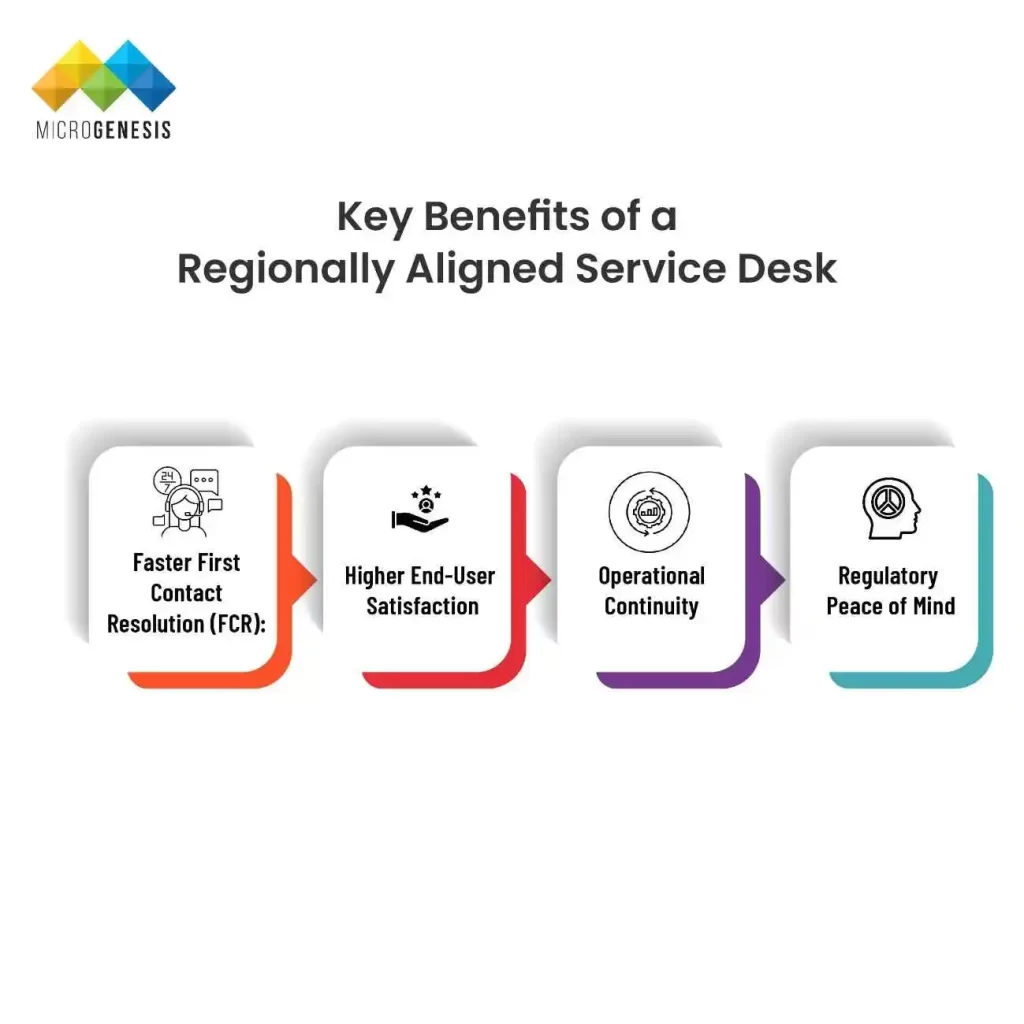
A service desk designed for Nordic/EU markets can drive significant operational improvements:
- Faster First Contact Resolution (FCR): Issues are addressed more efficiently by support teams who understand local systems, tools, and language
- Higher End-User Satisfaction: Localized, human-centric support improves user adoption and trust
- Operational Continuity: 24/7 service availability for critical systems ensures business continuity across borders and time zones
- Regulatory Peace of Mind: Providers comply with local data storage, access control, and breach notification requirements
Compliance and SLA Considerations
For enterprises in the Nordics and EU, compliance and SLAs are non-negotiable. A managed service desk must address:
📌 Data Protection and Residency
- All support interactions, logs, and data must remain within EU data centers, supporting GDPR and data sovereignty obligations.
- Identity access must follow role-based control, with logs available for audits and breach detection.
📌 SLA Structuring
- SLAs should be tiered based on business impact, not generic response templates.
- Examples include:
- Priority 1 incidents: <15-minute first response
- Critical infrastructure issues: 99.9% uptime guarantees
- Standard tickets: Resolution within 4–8 business hours
- Providers should offer SLA credits, monthly reports, and full visibility into metrics such as:
- Resolution time distribution
- Root cause trends
- Customer satisfaction (CSAT) scores
Use Case Example: Swedish Manufacturing Enterprise
Client Overview:
A Sweden-based global industrial manufacturer with over 3,000 employees across Europe was experiencing:
- Growing IT support backlog
- User dissatisfaction due to delayed resolution
- Risk of non-compliance due to data handling inconsistencies
Solution:
They transitioned from an in-house IT support team to a specialized managed service desk based in the Nordics, fully aligned with EU SLAs, GDPR compliance, and ISO 27001 data security standards.
Outcomes achieved:
- 35% increase in first-contact resolution rate within the first 90 days
- 40% reduction in ticket backlog, freeing up internal IT for high-priority tasks
- Data sovereignty maintained—all service logs, user details, and case data remained within Sweden and Finland-based data centers
- Improved audit readiness for internal and third-party compliance reviews
Service Integration and Management (SIAM) for Multi‑Vendor Environments
What Is SIAM?
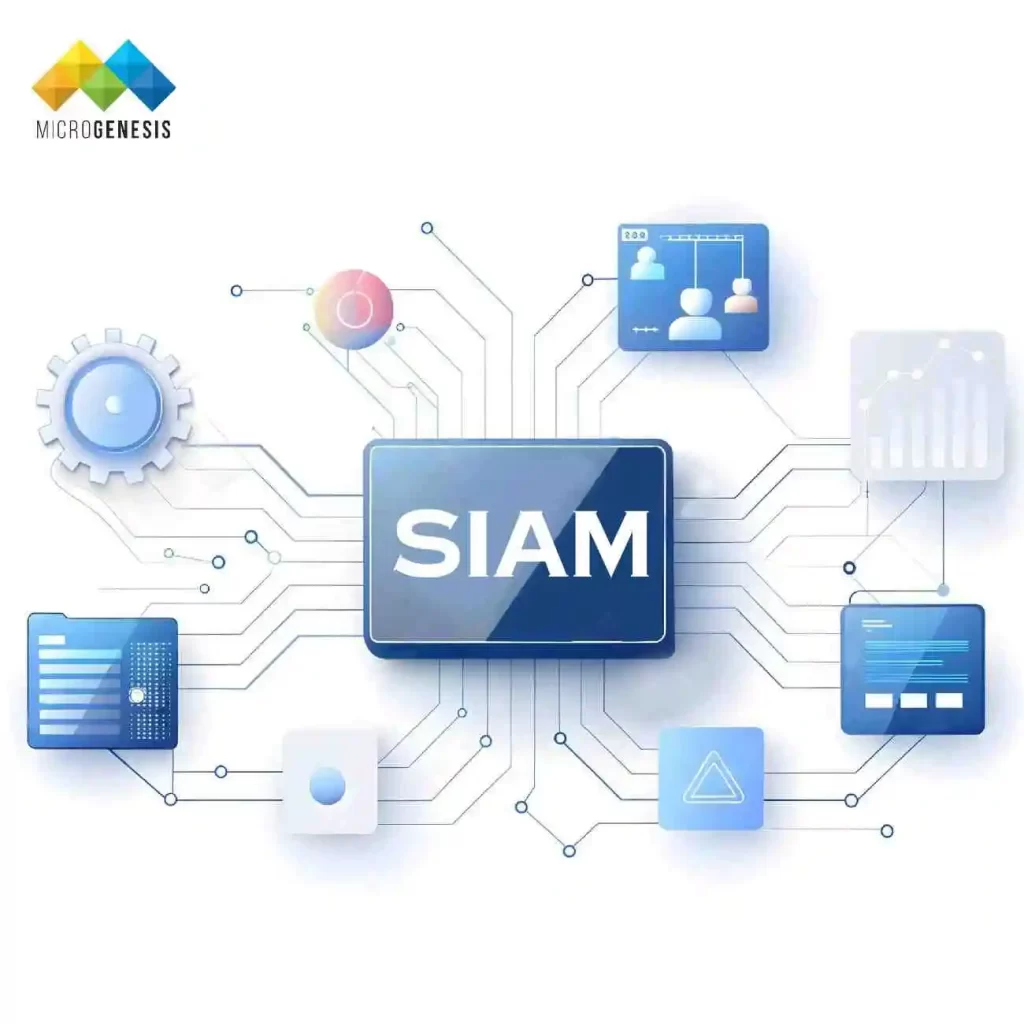
Service Integration and Management (SIAM) is a framework designed to coordinate and govern multiple IT service providers—internal and external—under a single operational model. In today’s enterprise environments, particularly across the Nordics and the EU, IT ecosystems often include a mix of:
- Regional outsourcing partners
- Global cloud and software vendors
- Niche digital service providers
Managing them separately often leads to siloed operations, overlapping responsibilities, and lack of visibility. SIAM addresses these challenges by introducing a centralized integrator role—either internal or third-party—that provides consistent management, integration, and oversight.
Why SIAM Matters in Multi‑Supplier Environments
In the Nordics and EU, enterprises are increasingly adopting a best-of-breed sourcing strategy, leveraging multiple vendors for cloud, cybersecurity, application services, and infrastructure. While this promotes innovation and flexibility, it also introduces complexity.
Without SIAM, organizations struggle with:
- Inconsistent service levels
- Disparate ticketing systems
- Conflicting escalation procedures
- Unclear ownership of incidents or failures
SIAM solves this by:
- Providing centralized coordination across all suppliers
- Ensuring uniform SLA enforcement and performance monitoring
- Facilitating contractual alignment and service governance
- Enabling transparency through common reporting structures
- Driving operational efficiency and reducing vendor friction
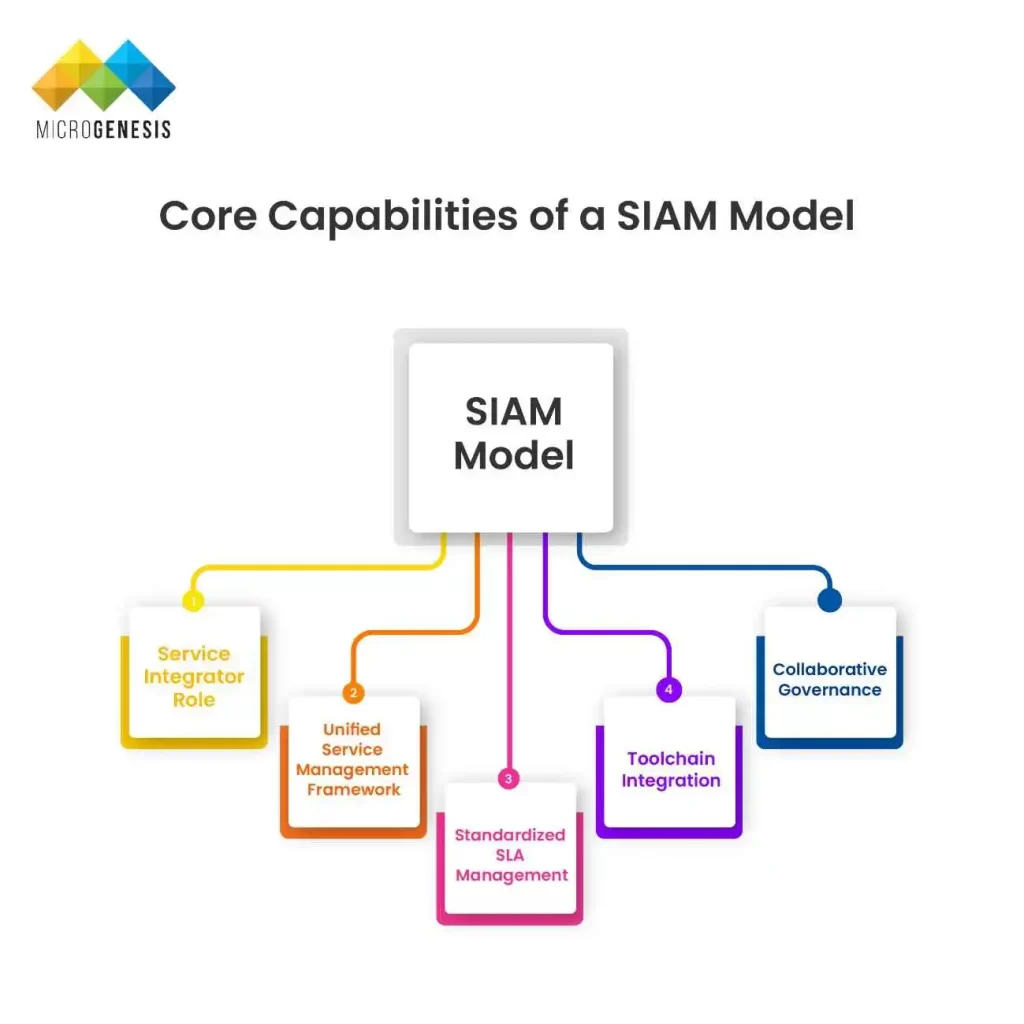
Core Capabilities of a SIAM Model
A robust SIAM implementation includes:
- Service Integrator Role: Acts as the single point of accountability for managing all service providers
- Unified Service Management Framework: Aligns incident, problem, change, and request processes across suppliers
- Standardized SLA Management: Establishes common KPIs and metrics for vendor comparison and accountability
- Toolchain Integration: Connects disparate ITSM tools (e.g., ServiceNow, Jira, BMC) to create a unified view of services
- Collaborative Governance: Regular reviews, joint planning, and escalation forums with all providers
European Case Study: Tier‑1 Automotive Supplier in Germany
Background:
A leading Tier‑1 automotive parts supplier in Germany managed over ten service providers for application support, network operations, cloud hosting, and cybersecurity. Each vendor worked in silos, using their own tools and SLAs, leading to frequent delays and unresolved incidents.
Challenge:
- Lack of centralized visibility
- SLA breaches with no accountability
- Misaligned KPIs across vendors
- Redundant change processes causing downtime
Solution:
The company adopted a SIAM model and engaged a regional SIAM integrator to lead the transformation.
Implementation Steps:
- Created a central SIAM office within IT governance
- Integrated all providers under a single reporting and escalation structure
- Standardized on shared dashboards and service review metrics
- Mapped service ownerships to eliminate overlaps and clarify responsibilities
Results:
- ⬇️ 30% reduction in incident resolution time
- 📈 Greater SLA adherence across all providers
- ✅ Enhanced transparency and executive reporting
- 🧩 Improved vendor collaboration and contract renewal negotiations
SIAM vs. Traditional ITSM: What’s the Difference?
While ITSM (IT Service Management) and SIAM share foundational principles (e.g., process discipline, ticket management, incident workflows), their scope and application differ dramatically in multi-vendor environments.
Here’s a clear comparison:
When to Adopt SIAM in the Nordics/EU
Organizations should consider implementing SIAM when:
- They rely on 3 or more IT service providers across various functions
- They face fragmented reporting and SLA tracking
- Their internal IT lacks the bandwidth for governing external providers
- They are undergoing M&A activities that combine multiple IT landscapes
- Regulatory audits require clarity in roles, responsibilities, and data flow
Strategic SIAM Considerations for Nordic and EU Enterprises
- Data Sovereignty: Ensure your SIAM model respects GDPR, local labor laws, and industry-specific regulations (e.g., NIS2, ISO 27001)
- Tool Neutrality: Choose a SIAM provider or strategy that supports integration with existing ITSM tools, rather than replacing them
- Supplier Engagement: Involve vendors early in the SIAM planning process to gain alignment and reduce friction
- Performance Culture: Use SIAM dashboards and scorecards not only for monitoring but also for improvement and collaboration
SIAM as a Foundation for Future IT Transformation
Beyond operational efficiency, SIAM sets the foundation for:
- Agile enterprise operations through faster vendor coordination
- Cloud and DevOps scaling across hybrid infrastructure
- Cybersecurity resilience through standardized incident management
- Innovation sourcing by allowing flexibility in vendor onboarding and trials
In an environment where digital transformation, compliance, and globalization are pressing priorities, SIAM is no longer optional—it is strategic.
Application Management Services (AMS) for Business Continuity
What is AMS and Why It Matters
Application Management Services (AMS) encompass the ongoing management, maintenance, support, and enhancement of enterprise applications—across both business-critical and back-office systems. AMS is not just about fixing bugs; it’s about ensuring applications remain aligned with evolving business needs, regulatory requirements, and technology standards.
In Nordic and EU enterprise contexts, AMS is critical because:
- Organizations often rely on legacy, ERP, or customized systems that require continuous upkeep
- There’s growing demand for compliance, scalability, and security across application environments
- Internal teams are often focused on innovation projects, not 24×7 support
AMS services typically include:
- Functional support: Troubleshooting business logic, workflows, and configuration issues
- Technical support: Addressing infrastructure compatibility, API integration, and performance
- Upgrade and patching services: Ensuring applications remain current, secure, and supported
- Monitoring and incident response: Proactive alerting and quick restoration of services
Tie-In with Application Lifecycle Management (ALM)
Modern AMS is increasingly intertwined with Application Lifecycle Management (ALM). In regulated and complex environments, AMS doesn’t just maintain systems—it ensures traceability, compliance, and agile delivery through:
- Change management: Managing updates with documented impact assessments
- Testing and validation: Automating test cases and maintaining quality gates
- Requirements traceability: Mapping changes to business needs and compliance mandates
- Continuous improvement loops: Feeding real-time operational insights back into development
This ALM-AMS synergy ensures applications don’t just stay online—they evolve intelligently and securely over time.
AMS in Regulated Industries (e.g. MedTech, Finance)
AMS becomes even more critical in highly regulated industries like medical technology (MedTech), pharmaceuticals, banking, and insurance, where every change must be traceable and compliant.
AMS providers in these sectors must ensure:
- Audit readiness: With detailed logs of support tickets, changes, and release notes
- Structured change control: With formalized approval workflows, rollback plans, and peer reviews
- Validation support: For regulated environments under FDA 21 CFR Part 11, EU MDR, or GxP
- Risk management: Including proactive vulnerability remediation and compliance reporting
Example – MedTech Scenario:
A Nordic-based MedTech firm leverages AMS for their clinical data management system. The AMS provider ensures every change is validated, documented, and compliant with MDR guidelines—helping the company pass EU audits with confidence while reducing downtime for clinical users.
Key Benefits of AMS for Nordic/EU Enterprises
1. Reduced Downtime and Improved Availability
- 24×7 support coverage with incident SLAs
- Proactive monitoring and issue resolution
- Root cause analysis and long-term corrective actions
2. Predictable Cost Models
- Shift from reactive CAPEX (major upgrades, crisis fixes) to OPEX (monthly managed support)
- Reduce internal hiring, training, and tool investment costs
- Scale AMS scope up/down as per business needs
3. Access to Specialists and Latest Skills
- Expert support for SAP, Oracle, Microsoft, Salesforce, or custom platforms
- Rapid deployment of upgrade or patch teams during high-risk periods
- Ongoing performance tuning to maintain speed and responsiveness
4. Alignment with Regulatory Compliance and Governance
- Audit-friendly processes and records
- Role-based access, version control, and security patching
- Support for data protection and sovereignty regulations like GDPR
5. Business Continuity and Innovation Enablement
- Ensure uninterrupted operations even during infrastructure or provider changes
- Enable business agility by freeing internal teams from legacy burdens
- Accelerate digital transformation by allowing IT to focus on forward-looking initiatives
Why AMS Matters More Than Ever in 2025
With growing cloud adoption, remote operations, and increasing cyber threats, AMS is not just about keeping applications running—it’s about maintaining resilience, agility, and trust across your digital landscape. In Nordic/EU markets where compliance, sustainability, and transparency are paramount, AMS serves as a critical pillar in the IT support stack.
Cloud Infrastructure Support for Enterprises
What Falls Under Managed Cloud Infrastructure Services
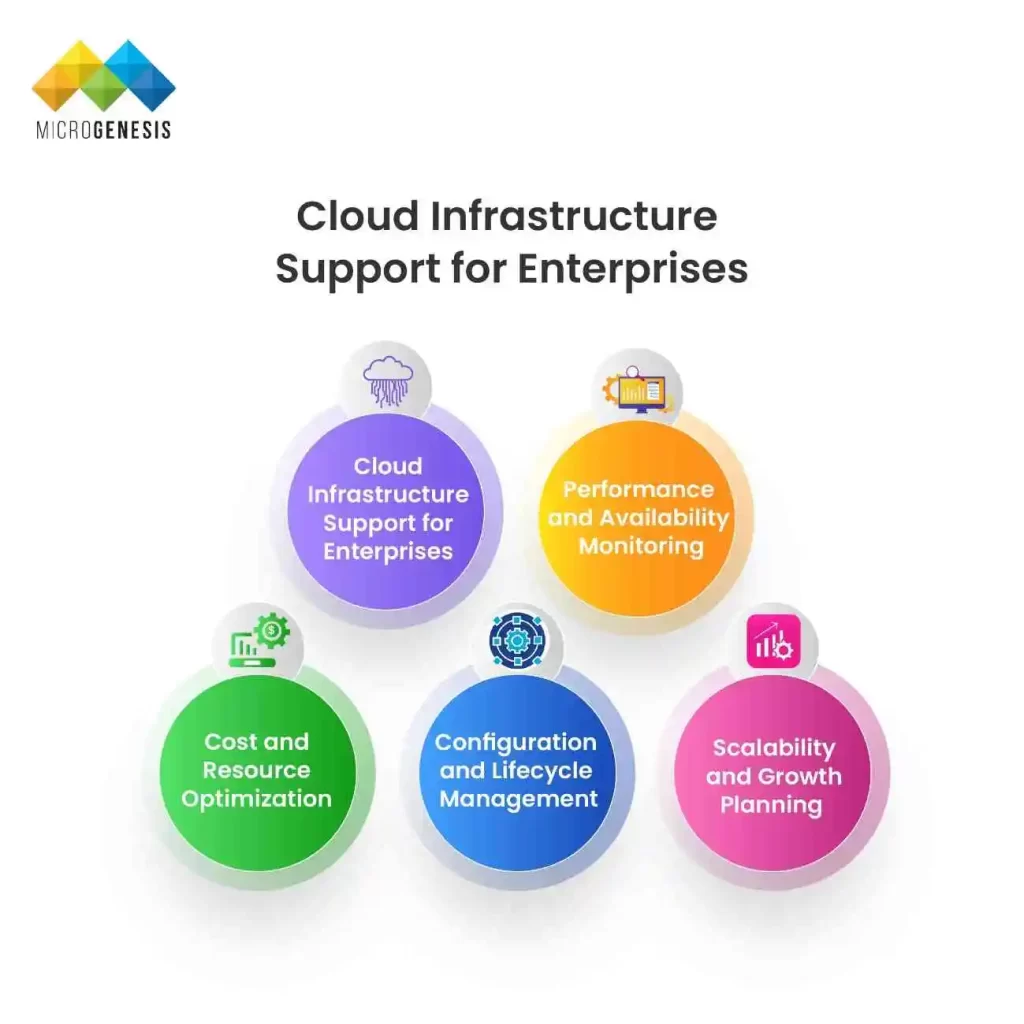
Managed cloud infrastructure support goes beyond simply hosting applications. It provides full-spectrum, expert-led operations management for cloud environments—private, public, hybrid, or multi-cloud—ensuring they’re secure, scalable, cost-effective, and compliant.
Typical services included in managed cloud infrastructure are:
- Security and Compliance Management
- Continuous threat monitoring and intrusion detection
- Patch and vulnerability management
- Identity and access controls
- Data encryption and backup services
- Compliance audits for GDPR, ISO 27001, SOC 2, etc.
- Performance and Availability Monitoring
- Proactive system health checks and auto-remediation
- Uptime management with SLA-driven guarantees
- Load balancing and failover configuration
- Cost and Resource Optimization
- Usage tracking and rightsizing recommendations
- Reserved instance planning or autoscaling strategies
- Billing analysis and multi-cloud cost control
- Configuration and Lifecycle Management
- Infrastructure as Code (IaC) deployment
- Template-based provisioning (e.g., Terraform, CloudFormation)
- Regular reviews for architectural improvement
- Scalability and Growth Planning
- Capacity planning for seasonal demand
- Load testing to ensure performance under stress
- CI/CD automation for rapid deployment and rollback
Sustainability and Energy Efficiency in the Nordic Context
Enterprises across the Nordics are increasingly prioritizing sustainable IT operations, not only to reduce environmental impact but also to align with strict ESG (Environmental, Social, Governance) goals and EU directives.
Managed cloud infrastructure plays a pivotal role in this movement by enabling:
- Use of Green Data Centers:
Many providers in Sweden, Finland, Norway, and Denmark operate carbon-neutral or hydroelectric-powered data centers.
- Low-Carbon Infrastructure Design:
Cloud architectures that use fewer servers or energy-efficient resources help reduce carbon footprints.
- Workload Optimization for Energy Efficiency:
Dynamic scaling, serverless computing, and containerization (e.g., Kubernetes) minimize idle workloads.
- Sustainability Reporting:
Generate audit-ready reports for CO₂ savings, renewable usage, and power usage effectiveness (PUE).
- Alignment with ESG and EU Climate Goals:
Help enterprises meet internal sustainability KPIs and external regulatory mandates like the European Green Deal and CSRD (Corporate Sustainability Reporting Directive).
Use Case Example: Finnish SaaS Provider
Challenge:
A Finland-based SaaS company offering healthcare analytics needed a cloud infrastructure partner to ensure high availability, strict regulatory compliance, and minimal environmental impact—all while preparing for global expansion.
Solution Implemented:
By engaging a managed cloud support provider with local expertise and access to green cloud infrastructure, the company was able to:
- Achieve Near-Zero Downtime:
SLA-backed 99.99% uptime using multi-zone architecture and automated failovers.
- Monitor Cost and Optimize Usage:
Implemented custom billing dashboards and predictive analytics to manage usage spikes and avoid over-provisioning.
- Align with Sustainability and Compliance Standards:
- The infrastructure ran in a Finnish green data center powered by 100% renewable energy.
- Generated detailed ESG compliance reports for investors and partners, supporting ISO 14001 and local environmental targets.
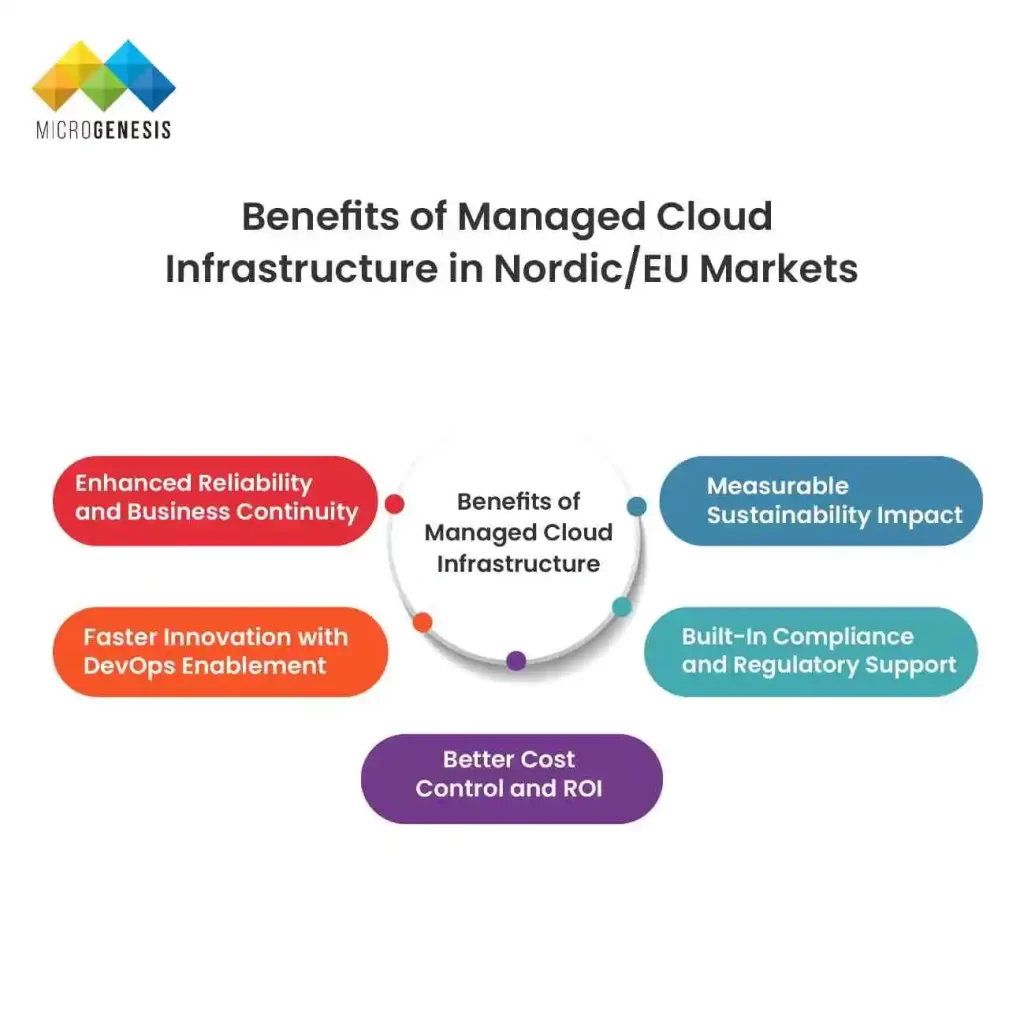
Benefits of Managed Cloud Infrastructure in Nordic/EU Markets
Enhanced Reliability and Business Continuity
- Reduce risk of service outages
- Eliminate single points of failure with multi-region deployments
- Ensure compliance with uptime SLAs
Faster Innovation with DevOps Enablement
- Infrastructure automation allows developers to focus on features
- Enable CI/CD pipelines and faster go-to-market timelines
Better Cost Control and ROI
- Avoid underutilization or overspending with active resource governance
- Plan budgets accurately with predictable OPEX
Built-In Compliance and Regulatory Support
- Ensure GDPR readiness with local data residency
- Keep up with evolving cloud-related mandates in healthcare, finance, or public sector
Measurable Sustainability Impact
- Meet ESG targets through transparent reporting
- Improve brand image and investor trust through verified green IT initiatives
Cloud Infrastructure Support in 2025 and Beyond With rising cloud complexity, tightening EU compliance requirements, and increased expectations for operational sustainability, cloud infrastructure management must be strategic, proactive, and partner-driven. The right managed services provider can ensure that your cloud ecosystem is not only robust and responsive—but also resilient and responsible.
How to Choose the Right Managed IT Services Partner
Selecting a managed IT services partner in the Nordics or broader EU region is not just about technical capabilities—it’s about long-term alignment with your business goals, regional compliance requirements, and operational culture. Here’s how to make the right choice:
Key Evaluation Questions to Ask
Before engaging a provider, evaluate them across several dimensions:
- Do they support tool-agnostic operations and Nordic/EU compliance frameworks?
A flexible, vendor-neutral approach ensures they can integrate with your current systems—whether SAP, Microsoft, Atlassian, or cloud-native stacks—without forcing migration or lock-in.
- Do they offer SLA-based services with measurable uptime and accountability?
Look for detailed service level agreements covering availability, first-response time, resolution timelines, and performance penalties or credits for non-compliance.
- Can they provide both remote and on-site support when needed?
Especially in hybrid work environments, the ability to deploy localized field support in Sweden, Germany, or Finland when remote resolution fails is critical.
- Are they certified in core areas like SIAM, AMS, cloud infrastructure, and service desk management?
Certification in ISO, ITIL, SIAM, or frameworks like COBIT reflects maturity and operational readiness.
Why Tool-Agnostic Expertise Matters
- Avoid Technology Lock-In:
Enterprises benefit from a partner who supports best-of-breed tools rather than pushing their own proprietary systems.
- Adaptability Across Multi-Cloud and Hybrid Setups:
Whether your workloads span AWS, Azure, GCP, or private cloud, a tool-agnostic provider can manage complex integrations and transitions.
- Future-Proofing IT Investments:
As technology stacks evolve, your provider’s independence ensures continuity and adaptability without major re-architecture.
Importance of SLA-Driven Support Models
- Reliability & Predictability:
Defined SLAs give you contractual assurances for uptime, resolution time, and responsiveness.
- Transparency:
Real-time dashboards and monthly service reviews help track vendor performance and enforce accountability.
- Escalation Clarity:
A mature partner will provide escalation matrices and dedicated service delivery managers for continuous engagement and improvement.
FAQs on Managed IT Services in Europe
What compliance considerations exist for managed IT in the EU?
Managed service providers must operate under strict regional data and operational laws. Key requirements include:
- GDPR Compliance: All services must respect personal data handling, processing, and residency requirements.
- Local Regulations: Depending on the sector (healthcare, finance, public sector), expect adherence to MDR, PSD2, NIS2, and other industry-specific directives.
- Contractual Obligations: Ensure contracts reflect local labor laws, audit clauses, and data breach reporting procedures.
Can we outsource while maintaining data sovereignty?
Yes, Nordic and EU enterprises can safely outsource without compromising sovereignty. Here’s how:
- Choose providers with EU-based data centers (Sweden, Finland, Germany, etc.)
- Validate GDPR adherence and data processing agreements (DPAs)
- Ensure all operations are managed under EU jurisdiction, avoiding data replication or storage outside Europe
Some advanced providers also support country-specific requirements, like data classification policies in Denmark or national cybersecurity mandates in Germany.
How fast can onboarding occur?
Timelines depend on the scope and readiness but generally follow this structure:
- Week 1–2: Discovery and stakeholder alignment
- Week 3–5: SLA drafting, tool integration, initial knowledge transfer
- Week 6–8: Pilot phase begins with limited scope (e.g., 1 business unit or country)
- Week 9+: Full rollout across environments and geographies
A well-structured onboarding plan with milestone tracking ensures a smooth and predictable transition, especially for critical support environments.
Conclusion
Ready to transform your IT operations for resilience, scalability, and compliance?
Book a free consultation with our managed services experts, specialized in supporting enterprises across the Nordics and Europe. We’ll help you:
- Identify gaps in your current service desk, SIAM, AMS, or cloud infrastructure support
- Design a compliant and SLA-backed managed service strategy
- Accelerate value delivery with regionally compliant, agile, and expert-led support models