

As organizations grow, they often engage multiple technology vendors to support software development, cloud infrastructure, quality assurance, cybersecurity, application maintenance, and digital transformation initiatives. While this approach may solve short-term resource challenges, managing numerous vendors can quickly become complex, expensive, and inefficient. Pasted text
Multiple vendors often introduce communication gaps, inconsistent engineering practices, overlapping responsibilities, and fragmented project ownership. Instead of accelerating innovation, organizations spend valuable time coordinating teams, managing contracts, resolving delivery issues, and aligning different technology partners.
Vendor consolidation addresses these challenges by reducing the number of external providers and building long-term partnerships with strategic engineering organizations capable of delivering multiple services under a unified governance model.
Many enterprises combine vendor consolidation with Managed Engineering Services, enabling them to simplify engineering operations, improve collaboration, reduce operational costs, and accelerate software delivery.
Whether you’re modernizing enterprise applications, expanding engineering teams, or managing global technology initiatives, vendor consolidation can help create a more efficient, scalable, and resilient engineering organization.
What Is Vendor Consolidation?
Vendor consolidation is the process of reducing the number of technology or engineering vendors an organization works with while increasing the scope of services delivered by trusted strategic partners.
Rather than managing separate providers for software development, cloud engineering, testing, infrastructure, and support, organizations partner with one or a few engineering firms capable of delivering integrated services across the software development lifecycle.
The objective is not simply to reduce the number of suppliers. It is to improve governance, streamline communication, optimize costs, and enhance overall engineering performance.
Vendor consolidation enables organizations to:
- Simplify engineering operations
- Improve project visibility
- Standardize engineering processes
- Reduce management overhead
- Improve delivery consistency
- Strengthen long-term partnerships
- Accelerate innovation
By consolidating vendors, engineering leaders gain greater control over technology initiatives while improving operational efficiency.
Why Organizations Are Consolidating Engineering Vendors
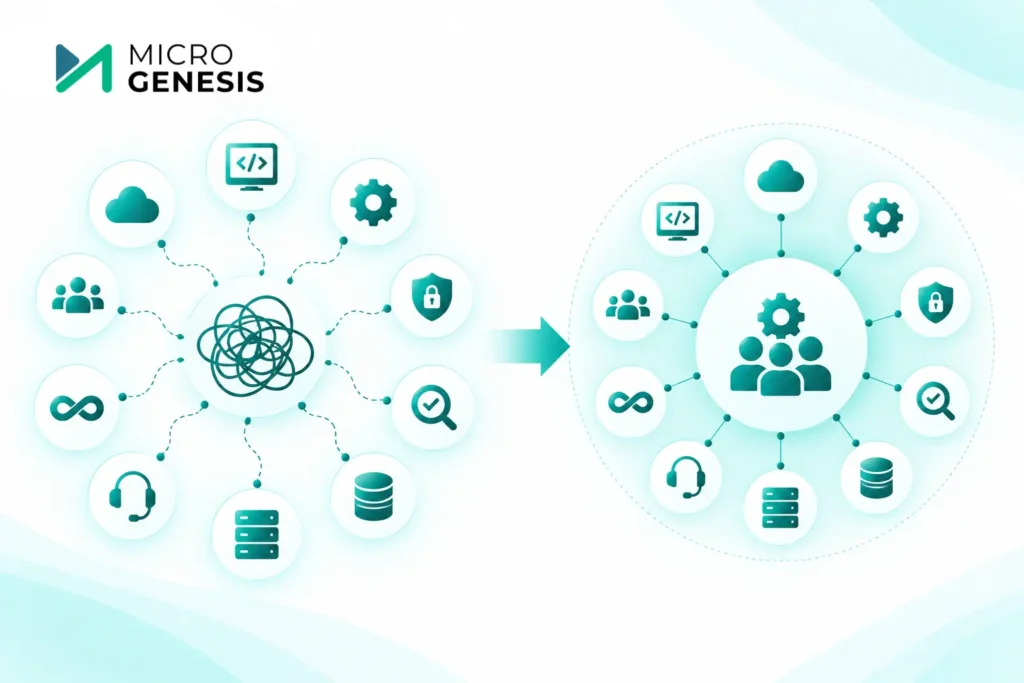
Digital transformation has significantly increased the number of technologies, platforms, and engineering disciplines involved in software development.
Organizations frequently work with separate vendors for:
- Custom software development
- Product engineering
- Cloud services
- DevOps
- Cybersecurity
- Quality assurance
- Data engineering
- Infrastructure management
- Application support
Although each vendor may provide specialized expertise, coordinating multiple providers often creates unnecessary complexity.
Vendor consolidation helps businesses create a more unified engineering ecosystem where teams collaborate toward shared business objectives instead of operating independently.
Challenges of Managing Multiple Engineering Vendors
Working with multiple vendors introduces operational and technical challenges that often slow product development and increase engineering costs.
Communication Gaps
Every vendor follows different communication practices, reporting structures, and delivery methodologies.
This often results in:
- Delayed decisions
- Misaligned priorities
- Duplicate work
- Slow issue resolution
- Limited project visibility
Engineering leaders spend more time coordinating vendors instead of focusing on strategic initiatives.
Inconsistent Engineering Standards
Different vendors may use different coding standards, development tools, testing practices, and documentation methods.
This can create:
- Software quality issues
- Technical debt
- Integration challenges
- Security inconsistencies
- Higher maintenance costs
Standardizing engineering practices across multiple providers becomes increasingly difficult as projects grow.
Higher Operational Costs
Managing several engineering vendors requires additional investment in governance, administration, procurement, and project management.
Hidden costs often include:
- Contract management
- Vendor meetings
- Knowledge transfer
- Project coordination
- Duplicate engineering resources
- Multiple reporting structures
These costs reduce the overall value organizations receive from outsourcing.
Many enterprises address these challenges as part of broader Engineering Cost Optimisation initiatives designed to improve efficiency while maintaining engineering quality.
Looking to identify where engineering costs are increasing across teams, vendors, and delivery processes? Explore our Engineering Cost Optimisation approach for practical ways to improve efficiency without compromising innovation.
Slower Product Development
Software delivery depends on effective collaboration between development, testing, operations, and business teams.
When multiple vendors operate independently, organizations often experience:
- Delayed feature releases
- Slow integration
- Approval bottlenecks
- Longer testing cycles
- Reduced engineering productivity
Businesses focused on Accelerating Product Development increasingly recognize that simplified vendor ecosystems improve collaboration and reduce delivery delays.
Limited Accountability
When multiple vendors contribute to the same product, identifying ownership becomes difficult.
Common challenges include:
- Shared responsibilities
- Delayed issue resolution
- Disputes between vendors
- Lack of end-to-end ownership
- Increased project risk
Without a clearly accountable engineering partner, resolving technical issues often takes longer than expected.
Signs It’s Time to Consolidate Vendors
Many organizations continue adding vendors as business needs evolve, without regularly reviewing whether their existing operating model remains effective.
The following signs indicate it may be time to consider vendor consolidation.
Your organization works with too many technology providers
Managing numerous contracts, meetings, and communication channels consumes valuable management time and increases administrative overhead.
Software delivery is becoming slower
Despite investing in additional engineering resources, product releases continue to be delayed because multiple vendors struggle to coordinate effectively.
Engineering costs continue to increase
Recruitment, vendor management, duplicated activities, and inconsistent delivery processes result in higher operational costs without improving business outcomes.
Different vendors follow different engineering practices
Inconsistent development standards, testing processes, security policies, and documentation create quality issues and increase long-term maintenance costs.
Your internal teams spend more time managing vendors than driving innovation
Engineering leaders should focus on business strategy, product innovation, and customer value, not coordinating multiple service providers.
Scaling projects becomes increasingly difficult
Every new initiative requires additional vendor coordination, slowing decision-making and reducing organizational agility.
Many organizations solve this challenge by partnering with providers offering Managed Software Development, enabling them to streamline engineering delivery while reducing management complexity.
Benefits of Vendor Consolidation
Organizations that consolidate engineering vendors typically experience measurable improvements across productivity, governance, cost efficiency, and software delivery.
Some of the biggest benefits include:
- Simplified project governance
- Better engineering collaboration
- Improved software quality
- Faster decision-making
- Reduced operational costs
- Stronger accountability
- Better knowledge retention
- Greater engineering scalability
Rather than managing multiple disconnected vendors, businesses gain a strategic engineering partner focused on delivering long-term business value.
How Vendor Consolidation Improves Engineering Performance
Reducing the number of engineering vendors is not simply an operational decision. It is a strategic initiative that improves collaboration, delivery efficiency, and business outcomes.
By partnering with fewer strategic providers, organizations can create a unified engineering environment where teams follow consistent processes, share common objectives, and work together more effectively.
1. Simplified Engineering Governance
Managing multiple vendors often requires separate reporting structures, project reviews, communication channels, and performance metrics.
Vendor consolidation simplifies governance by creating a single framework for managing engineering activities.
Benefits include:
- Centralized project reporting
- Standardized KPIs
- Consistent engineering processes
- Faster decision-making
- Better risk management
- Improved executive visibility
With fewer vendors to coordinate, engineering leaders can focus on strategic priorities instead of day-to-day administration.
2. Improved Collaboration Across Teams
Software development depends on close collaboration between developers, architects, QA engineers, DevOps specialists, and business stakeholders.
When multiple vendors operate independently, communication often becomes fragmented.
Vendor consolidation creates stronger collaboration by:
- Aligning engineering objectives
- Standardizing communication
- Reducing duplicate work
- Improving knowledge sharing
- Accelerating issue resolution
Engineering teams work as one integrated organization rather than separate service providers.
3. Higher Software Quality
Different vendors often use different coding standards, testing approaches, documentation methods, and release processes.
A consolidated engineering model introduces consistent quality standards across every project.
Organizations benefit from:
- Standardized coding practices
- Automated quality checks
- Consistent testing methodologies
- Improved security compliance
- Better documentation
- Reduced technical debt
Higher engineering consistency leads to more reliable software and lower long-term maintenance costs.
4. Reduced Operational Costs
One of the biggest advantages of vendor consolidation is eliminating unnecessary operational overhead.
Instead of managing several contracts and engineering partners, organizations work with a smaller number of trusted providers.
This helps reduce:
- Vendor management costs
- Administrative effort
- Procurement complexity
- Duplicate engineering activities
- Knowledge transfer expenses
- Project coordination overhead
Many organizations combine vendor consolidation with broader Engineering Cost Optimisation initiatives to maximize engineering efficiency while maintaining software quality.
5. Faster Product Delivery
Product development becomes more efficient when engineering teams operate under a unified delivery framework.
Vendor consolidation helps accelerate software delivery by:
- Improving communication
- Reducing approval delays
- Streamlining engineering workflows
- Increasing accountability
- Simplifying release management
Organizations focused on Accelerating Product Development often look at delivery structure, engineering capacity, and collaboration together when improving release cycles.
Vendor Consolidation Through Managed Engineering Services
Many organizations use vendor consolidation as an opportunity to modernize their engineering operating model.
Instead of managing separate providers for software development, testing, cloud engineering, DevOps, and maintenance, they partner with a single provider offering Managed Engineering Services.
This approach creates a centralized engineering organization capable of supporting the complete software development lifecycle.
Typical services include:
- Software Development
- Product Engineering
- Cloud Engineering
- DevOps
- Quality Assurance
- Application Modernization
- Maintenance and Support
- Engineering Consulting
Working with one strategic engineering partner simplifies delivery while improving consistency across projects.
Need to simplify multiple engineering engagements under a more structured delivery model? Explore Managed Engineering Services to see how a unified engineering model can support your organization.
Managed Software Development Supports Vendor Consolidation
Organizations that consolidate vendors often choose Managed Software Development because it provides end-to-end ownership of software delivery.
Instead of coordinating multiple suppliers, businesses work with one engineering partner responsible for:
- Planning
- Architecture
- Development
- Testing
- Deployment
- Ongoing support
Benefits include:
- Better accountability
- Faster issue resolution
- Predictable delivery
- Continuous improvement
- Reduced operational complexity
This model allows internal teams to focus on product strategy while engineering experts manage software delivery.
Dedicated Development Teams Strengthen Long-Term Partnerships
Successful vendor consolidation is built on long-term collaboration rather than transactional outsourcing.
Many organizations establish Dedicated Development Teams that work exclusively on their products and business initiatives.
Advantages include:
- Deep product knowledge
- Consistent engineering teams
- Better collaboration
- Faster onboarding
- Improved knowledge retention
- Long-term scalability
Dedicated teams become an extension of the internal engineering organization, supporting continuous innovation and business growth.
If your organization needs dedicated engineering capacity without adding another layer of vendor complexity, explore Dedicated Development Teams.
Multiple Vendors vs Strategic Engineering Partner
Organizations evaluating vendor consolidation often compare their current operating model with a strategic engineering partnership.
| Multiple Vendors | Strategic Engineering Partner |
|---|---|
| Multiple contracts | Single strategic relationship |
| Different engineering standards | Standardized engineering practices |
| Complex communication | Centralized collaboration |
| Shared accountability | Clear ownership |
| Higher management overhead | Simplified governance |
| Slower delivery | Faster software delivery |
| Difficult scalability | Flexible engineering expansion |
As organizations grow, a strategic engineering partner provides greater flexibility, consistency, and long-term value than managing multiple disconnected vendors.
Building Long-Term Engineering Partnerships
Vendor consolidation is most successful when organizations focus on building trusted partnerships instead of simply reducing supplier numbers.
A strong engineering partnership delivers:
- Shared business objectives
- Continuous improvement
- Engineering innovation
- Transparent communication
- Scalable delivery capabilities
- Long-term knowledge retention
- Better customer outcomes
Rather than acting as external suppliers, strategic engineering partners become an extension of the business, supporting growth through every stage of the software development lifecycle.
Scale Engineering Operations with Flexible Delivery Models
Vendor consolidation creates the foundation for scalable engineering operations. However, organizations also need delivery models that can adapt to changing business priorities, project demands, and technology requirements.
Instead of managing multiple specialist vendors for every initiative, businesses can build flexible engineering organizations capable of supporting both current and future growth.
Scaling Engineering Teams Through Strategic Partnerships
As organizations expand, engineering capacity must grow without increasing operational complexity.
Working with a strategic engineering partner enables businesses to:
- Expand development teams quickly
- Access specialized engineering expertise
- Support multiple product teams
- Improve engineering productivity
- Reduce recruitment delays
- Accelerate software delivery
Many enterprises integrate vendor consolidation with Scaling Engineering Teams strategies, enabling them to increase engineering capacity while maintaining governance, quality, and operational efficiency.
Organizations expecting long-term growth also invest in Extended Engineering Teams, creating dedicated engineering capabilities that evolve alongside their products and business objectives.
Planning to expand engineering capacity while keeping governance centralized? Learn more about Engineering Augmentation Services and flexible ways to extend your existing teams.
Choose the Right Global Delivery Model
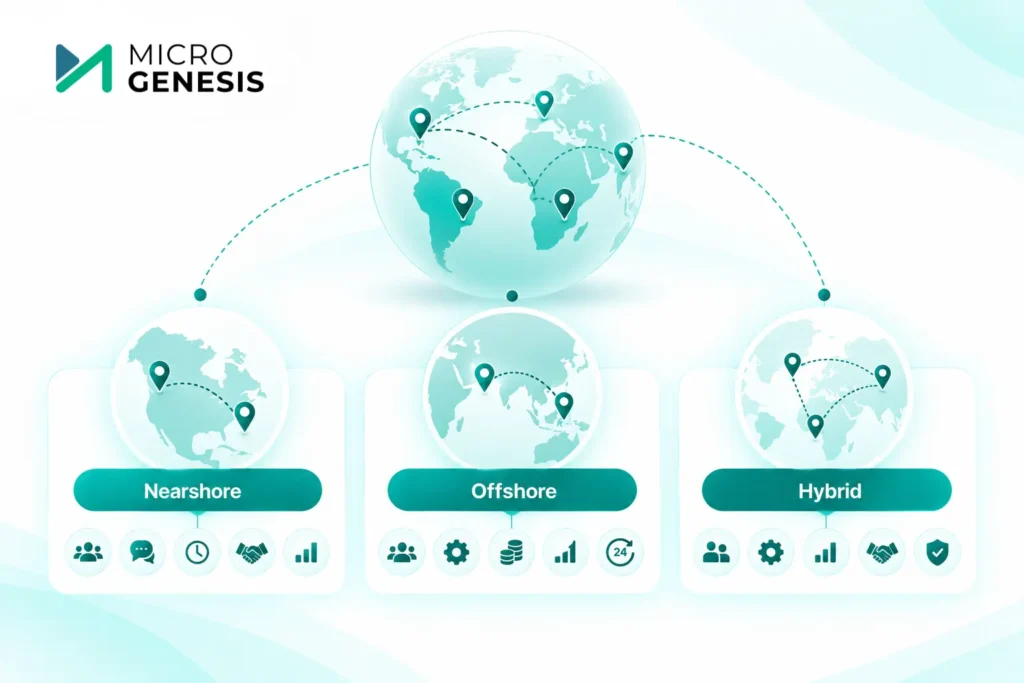
Global engineering organizations increasingly combine local expertise with distributed delivery models to optimize collaboration, scalability, and cost efficiency.
Selecting the right model depends on project complexity, business priorities, and communication requirements.
Nearshore Development
Nearshore teams enable organizations to collaborate with engineering professionals in nearby regions, providing better time-zone alignment and closer business interaction.
Benefits include:
- Real-time collaboration
- Faster decision-making
- Improved communication
- Stronger cultural alignment
- Easier stakeholder engagement
Organizations evaluating regional engineering strategies often compare Nearshore vs Offshore Development to identify the best balance between collaboration and operational efficiency.
Offshore Development
Offshore engineering provides access to larger talent pools and specialized technical expertise while helping organizations optimize operational costs.
Advantages include:
- Rapid engineering expansion
- Access to niche technical skills
- Lower development costs
- Long-term engineering capacity
- Continuous software development
With strong governance and standardized engineering practices, offshore teams become an integral part of enterprise software delivery.
Hybrid Delivery Models
Many organizations adopt Hybrid Delivery Models that combine onsite leadership, nearshore collaboration, and offshore development teams.
A hybrid approach provides:
- Flexible engineering capacity
- Better resource utilization
- Faster software delivery
- Improved collaboration
- Reduced operational costs
- Greater business resilience
By implementing hybrid delivery models, businesses can simplify vendor management while maintaining engineering quality across global delivery teams.
Why Nordic Companies Are Consolidating Engineering Vendors
Organizations across Sweden and the Nordic region are investing heavily in digital transformation, cloud technologies, AI, and enterprise modernization. At the same time, managing multiple engineering vendors has become increasingly complex.
Vendor consolidation helps Nordic businesses improve governance, reduce operational costs, and accelerate software delivery while addressing engineering talent shortages.
Key business drivers include:
- Increasing software complexity
- Engineering talent shortages
- Rising recruitment costs
- Digital transformation initiatives
- Cloud migration
- Product engineering expansion
- Greater demand for specialized engineering skills
Many organizations strengthen their engineering capabilities through Software Development Outsourcing in Sweden, combining local business expertise with globally distributed engineering teams.
Growing demand for skilled engineers has also highlighted significant Engineering Talent Challenges in Nordic Markets, encouraging enterprises to simplify their engineering ecosystems and build long-term strategic partnerships.
By Building Distributed Teams for Nordic Companies, businesses gain access to global engineering talent while maintaining consistent governance, collaboration, and software quality.
Best Practices for Successful Vendor Consolidation
Vendor consolidation should focus on improving engineering performance rather than simply reducing the number of suppliers.
Organizations that achieve the best results typically follow these best practices:
✔ Evaluate vendor performance based on business outcomes rather than cost alone.
✔ Standardize engineering processes across all teams.
✔ Establish clear governance and communication frameworks.
✔ Build long-term engineering partnerships instead of short-term supplier relationships.
✔ Use common development tools, security standards, and quality assurance practices.
✔ Continuously measure engineering KPIs and delivery performance.
✔ Adopt scalable delivery models that support future business growth.
✔ Focus on collaboration, innovation, and continuous improvement.
Following these practices enables organizations to create engineering ecosystems that are more efficient, resilient, and capable of supporting long-term digital transformation.
How MicroGenesis Can Help
Managing multiple engineering vendors can slow innovation, increase operational costs, and create unnecessary complexity.
At MicroGenesis Sweden AB, we help organizations simplify engineering operations by delivering integrated engineering services through a single strategic partnership. Our experienced teams work across the entire software development lifecycle, helping businesses improve governance, reduce vendor complexity, and accelerate product delivery.
Our Engineering Capabilities
- Managed Engineering Services
- Managed Software Development
- Dedicated Development Teams
- Product Engineering
- Cloud Engineering
- DevOps Services
- AI and Data Engineering
- Digital Engineering
- Quality Assurance and Test Automation
- Engineering Consulting
Why Partner with MicroGenesis?
- Experienced engineering professionals across multiple technology domains
- Flexible onsite, nearshore, offshore, and hybrid delivery models
- Proven Agile and DevOps practices
- Transparent governance and reporting
- Scalable engineering teams
- Enterprise-grade quality and security standards
- Long-term engineering partnerships focused on measurable business outcomes
Whether you’re looking to consolidate vendors, modernize software delivery, or scale engineering capabilities, MicroGenesis provides the expertise and delivery models needed to support your long-term business goals.
If application modernization is part of your vendor consolidation strategy, explore Application Modernization Services to modernize legacy applications and create a more scalable engineering environment.
If you need flexible engineering capacity to support multiple initiatives, explore Engineering Augmentation Services for additional engineering expertise aligned with your delivery needs.
Frequently Asked Questions
What is vendor consolidation?
Vendor consolidation is the process of reducing the number of external suppliers while partnering with strategic providers capable of delivering multiple engineering or technology services under a unified governance model.
Why is vendor consolidation important?
Vendor consolidation simplifies engineering operations, improves collaboration, reduces management overhead, strengthens accountability, and enables organizations to accelerate software delivery while lowering operational costs.
How does vendor consolidation improve engineering performance?
By reducing communication gaps, standardizing engineering practices, improving governance, and creating long-term partnerships, organizations can deliver software faster while maintaining consistent quality.
Can vendor consolidation reduce engineering costs?
Yes. Vendor consolidation reduces administrative overhead, eliminates duplicate processes, improves resource utilization, and supports broader Engineering Cost Optimisation initiatives.
Is vendor consolidation suitable for enterprise organizations?
Absolutely. Enterprises managing multiple technology providers often benefit from vendor consolidation because it improves governance, simplifies operations, and strengthens strategic engineering partnerships.
How can MicroGenesis support vendor consolidation?
MicroGenesis helps organizations replace fragmented vendor ecosystems with integrated engineering services that improve collaboration, accelerate product development, optimize costs, and support long-term digital transformation.
Conclusion
As engineering organizations grow, managing multiple vendors often creates unnecessary complexity that slows software delivery, increases operational costs, and reduces accountability. Vendor consolidation provides a strategic opportunity to simplify engineering operations while improving collaboration, governance, and overall business performance.
By partnering with a trusted engineering provider, organizations can standardize development processes, streamline communication, and build scalable engineering capabilities that support long-term innovation. Combined with Managed Engineering Services, Managed Software Development, and Dedicated Development Teams, vendor consolidation enables businesses to reduce operational overhead without compromising quality or agility.
For organizations across Sweden and the Nordic region, vendor consolidation is becoming a key strategy for addressing engineering talent shortages, accelerating digital transformation, and improving software delivery outcomes.
If your organization is looking to simplify engineering operations and build a more efficient technology ecosystem, MicroGenesis Sweden AB can help. Our integrated engineering services, flexible delivery models, and experienced engineering teams enable businesses to consolidate vendors, accelerate innovation, and achieve sustainable business growth.
Ready to simplify your engineering ecosystem? Contact MicroGenesis Sweden AB to discover how our engineering expertise and managed delivery services can help you reduce complexity, improve efficiency, and deliver better business outcomes.